

It’s been a busy week!
First, I am pumped to share my latest piece for the New York Times, Stop Pathologizing Ordinary Life. In it, I make the case that our culture has become overly preoccupied with mental health. The more we broaden what counts as a disorder, the more we start seeing normal unpleasant psychological states as mental illness, and this can become a self-fulfilling prophecy, making us more distressed and less resilient.
Regular readers will be familiar with this argument, as it is the same case I have been building through Head Out, which I announced here a few weeks ago. You can learn more about Head Out here, and access our first toolkit here.
The response to the NYT piece has been overwhelmingly positive. Many psychologists and educators have reached out to voice their agreement and share some of their own concerns about issues such as therapy culture, mental health misinformation, interventions that aren’t evidence-based, and overdiagnosis. This gives me hope that we can think about mental health more productively, without giving up the real progress we have made.
I also have a new podcast to share. The Atlantic just released the first episode of a new series called How to Touch Grass, and I am the guest. We talked about why so many people, especially Gen Z, feel nostalgic for a time before smartphones, how this reflects a desire for a healthier relationship with technology, how nostalgia can actually help us get there, the distinction between nostalgia and declinism, why I am optimistic about Gen Z, and other topics.
Speaking of nostalgia and the desire for more analog living, I was also interviewed for a CBC article that came out this week on the rise of snail-mail clubs. People are paying to receive handwritten letters, art, and other small tangible things in the mail. It is a fun article and a great illustration of the retro renaissance I have written about in this newsletter and for outlets like the New York Times and Big Think.
On a related note, I’m the nostalgia expert for NBC, and I’ve made a number of appearances on their programming. Most of them have focused on Gen Z nostalgia trends, such as the iPhone 5c comeback. But last week I got to talk about my own generation! NBC Today did a segment on the wave of ‘80s and ‘90s nostalgia showing up on store shelves, like Costco’s Esprit sweatshirts selling out among Gen Xers. I talked about how nostalgia is a useful psychological resource for all generations and how reconnecting with these old brands and styles can make middle-aged and older adults feel young at heart, which is good for us.
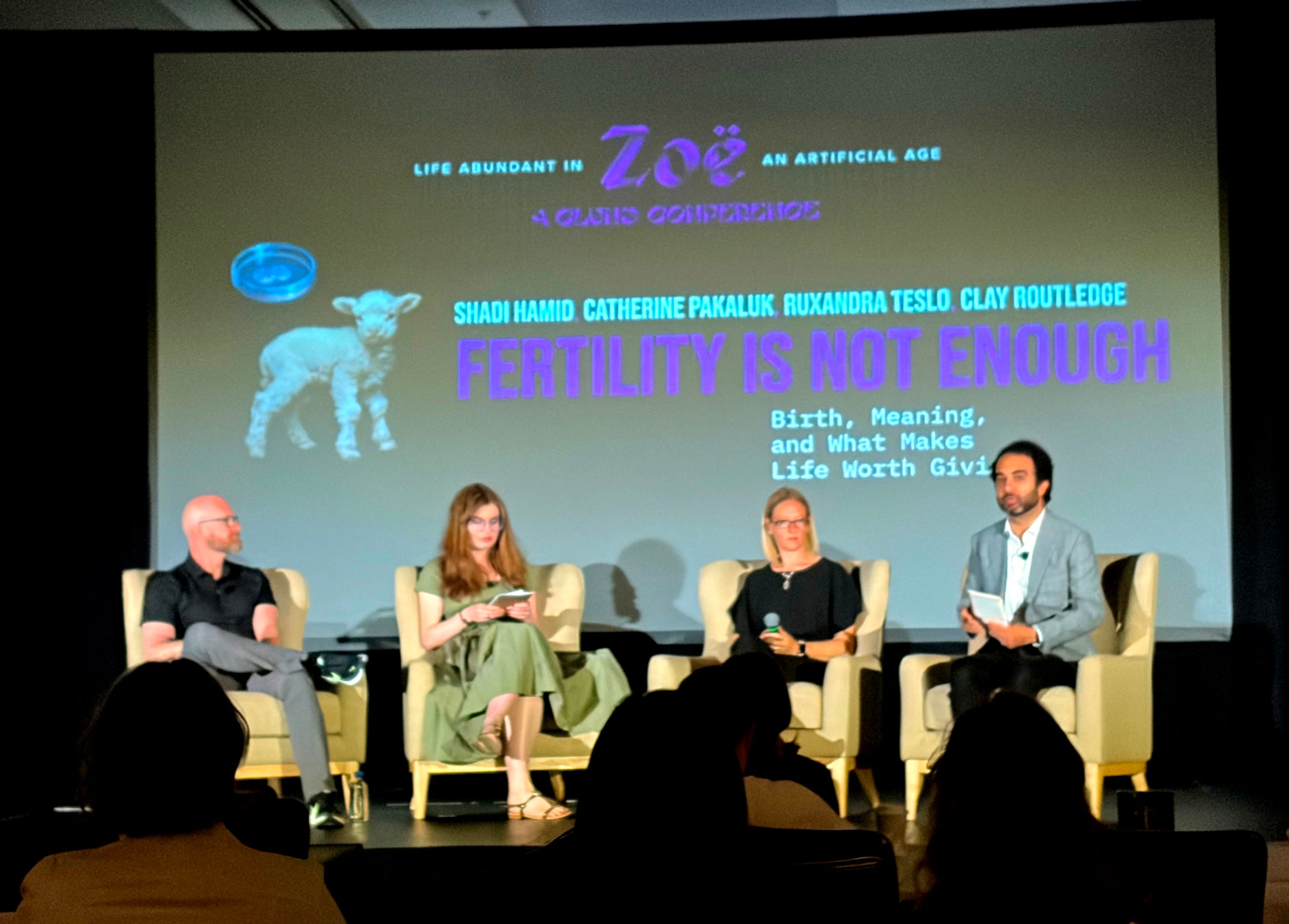
Finally, I just got back in town from Napa. I was there for the Zoë conference, where I was on a panel about declining birth rates. I was invited to talk about what existential psychology can add to that conversation. Economics and policy matter, but I think the psychological and cultural dimensions deserve more attention. In surveys, many Americans say marriage and children are not important for living a fulfilling life, even though most of them identify family as the greatest source of meaning in their own lives. For more of my thoughts, here is an article I wrote on the topic.
One last thing. I have a couple of big projects I want to spend more time on, so Flourishing Friday is going to be less frequent for a while. I also turn 50 in August, so I plan to take some vacation time and put some of my own nostalgia research to use, doing a few things that help me feel young at heart.
Have a great weekend!
Clay