

I’ve been on the road a lot recently, sharing the work our team at the Archbridge Institute’s Human Flourishing Lab has been doing on the psychology of progress and abundance. Last week, I attended the Liberal Solutions Summit hosted by the Institute for Humane Studies, where I had the privilege of giving a talk on why psychological science matters for building a more abundant future. Before that, I was at the Progress Conference talking about AI and the good life and sharing new results from our latest Progress Pulse survey. And next week I’ll be at Soapbox, a conference hosted by the Foundation for Individual Rights and Expression (FIRE). Archbridge is a sponsor, and our team will be there sharing materials from Head Out, our mental health public education initiative.
Between travel and a recent loss in my family, Flourishing Friday has been a bit more intermittent lately, and that may continue for a little while.
But this week I want to share a new Profectus article by Dr. John Bitzan that we published on Wednesday for National Immigrants Day. Dr. Bitzan is the Director of the Challey Institute for Global Innovation and Growth and a professor of management at North Dakota State University. His article is about how immigration affects state economies. I think it’s a timely and important piece.
Immigration is a heated topic in our politics. But when you ask Americans about the role immigrants have played in this country, there is actually a lot of agreement.
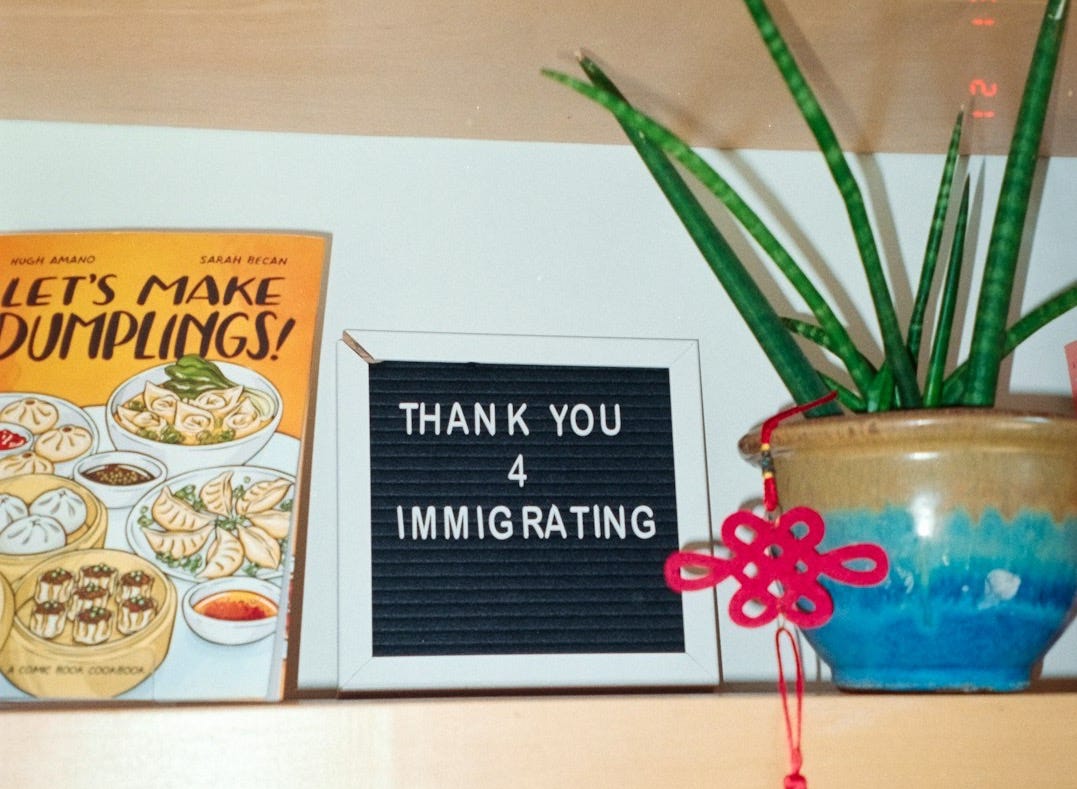
Every year, the Archbridge Institute surveys a nationally representative sample of Americans about the American Dream. In this year’s survey, we asked several questions about immigration. We found that most Americans have a positive view of immigrants. For instance, 81% agreed that immigrants play an important role in America’s success. And 80% agreed that immigrants have made America a stronger country.
These views are shared across the political spectrum. Majorities of Democrats, Republicans, and Independents agreed with these statements. There is a lot more in this year’s survey, including how Americans define the American Dream and whether they believe they can achieve it. You can read the full report here.
People may have specific disagreements about how our immigration system should work. But most Americans see immigrants as part of the American story and the American Dream.
Still, in our public discourse, there do seem to be concerns about the potential negative economic effects of immigration. One psychological factor I think is relevant to these concerns is zero-sum thinking. This is the belief that one person’s gain has to come at someone else’s expense. Research has found that people who think in zero-sum terms are more likely to support stricter immigration policies.
Dr. Bitzan’s article addresses these concerns with data, and it tells a more positive-sum story. He and his colleagues at the Challey Institute looked at more than a decade of economic and population data from every U.S. state. They found that, on average, immigration grows state economies by more than it grows their populations. That means more economic output per person, which benefits native-born residents as well as immigrants. The benefits are especially large in rural states and in states with more economic freedom. A big part of the reason is that immigrant and native-born workers tend to complement each other rather than compete.
Dr. Bitzan also discusses these findings in the context of declining immigration and an aging population, which makes them especially relevant right now.
I encourage you to read the full article.
Human flourishing isn’t zero-sum. When people are free to pursue their dreams, they often create new opportunities for others. Immigrants pursuing the American Dream are a good example. Their hope and effort help them build better lives. And as this new research suggests, they also help the communities they join thrive.
Have a great weekend!
Clay